Shop
Showing 1–12 of 20 results
-
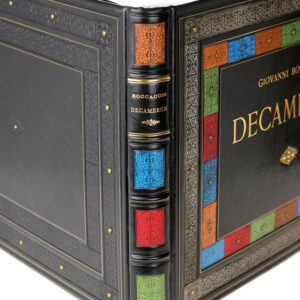
Giovanni Boccaccio, Decameron
Certain libraries are formed around literature alone. Others emerge from an entire way of inhabiting the world. Books & Gardens belongs to the latter tradition. Few works in European literature possess the vitality of Boccaccio’s Decameron. Written in the shadow of plague and social collapse,...Read more -
Adam Mickiewicz, Pan Tadeusz
More than a national epic, Pan Tadeusz preserves the memory of an entire European civilisation. Written in exile during the nineteenth century, Adam Mickiewicz’s masterpiece gathers within itself landscape, ritual, memory, hospitality, seasonal rhythm, and the codes of a cultivated landed culture already passing into...Read more -
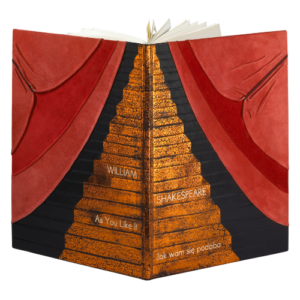
William Shakespeare, As You Like It
Not every Shakespearean comedy invites lightness. As You Like It does so with unusual intelligence. Behind its wit, disguises, pastoral play, and theatrical irony lies a meditation on identity itself: on the instability of roles, the freedom of performance, and the fragile distance between civilisation...Read more -
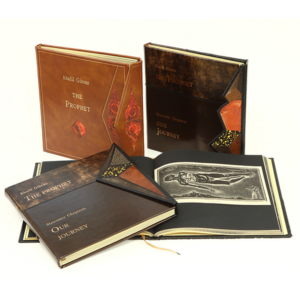
Khalil Gibran, The Prophet
Some books are read. Others are inhabited across a lifetime. Khalil Gibran’s The Prophet belongs to that rare category of works which pass quietly from literature into personal memory. Structured as a sequence of reflections on love, work, freedom, sorrow, joy, and human destiny, the...Read more -
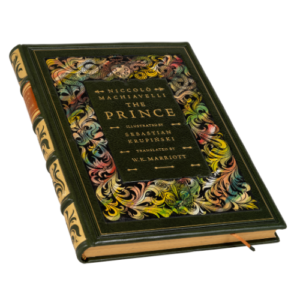
Niccolò Machiavelli, The Prince
Few political works have exercised such persistent influence upon the European imagination as Machiavelli’s The Prince. Feared, prohibited, admired, and endlessly debated, the text has survived not because it flatters power, but because it describes it with unusual clarity. Machiavelli strips political authority of idealisation...Read more -
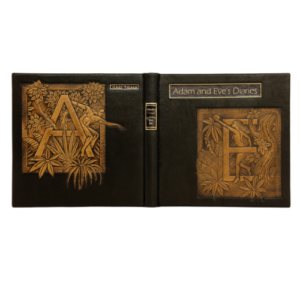
Mark Twain, Adam and Eve’s Diaries
Few literary works describe love with such delicacy beneath apparent simplicity. In Adam and Eve’s Diaries, Mark Twain transforms the biblical beginning of humanity into a study of curiosity, misunderstanding, tenderness, and emotional recognition. The humour remains light, yet beneath it lies an unusually perceptive...Read more -
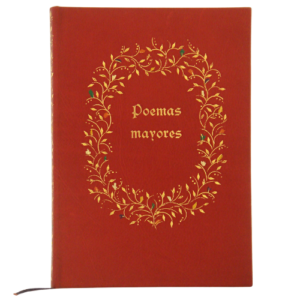
San Juan de la Cruz, The Poems of Saint John of the Cross
There are literary works that approach the limits of language itself. The poetry of Saint John of the Cross belongs among them. Written under conditions of imprisonment, spiritual extremity, and profound inward solitude, these texts occupy a singular place within both Spanish literature and the...Read more -
Heinrich Heine, Sonnets / Sonette
Heinrich Heine’s poetry occupies a singular place within European Romanticism. Beneath its lyrical grace lies intellectual precision; beneath its elegance, irony; beneath its apparent simplicity, emotional instability carefully held in balance. This first Polish–German bibliophile edition of Sonnets / Sonette was conceived in response to...Read more -
Jacques Prévert, L’Orgue de Barbarie
Certain poems resist enclosure within ordinary form. Jacques Prévert’s L’Orgue de Barbarie unfolds through repetition, return, interruption, and circular rhythm. The poem advances only to begin again, moving with the mechanical persistence of the barrel organ from which it takes its name. This bilingual edition...Read more -
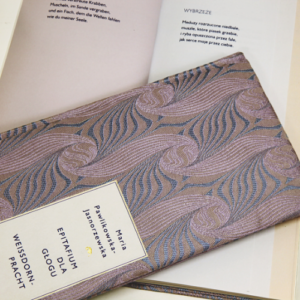
Maria Pawlikowska-Jasnorzewska, Epitaph for Hawthorn
Some books are designed to be read. Others are designed to alter atmosphere itself. This Polish–German edition of Epitaph for Hawthorn was conceived as a lyrical object governed by mood, tactility, colour, and sensory memory. The poetry of Maria Pawlikowska- Jasnorzewska — delicate, intimate, fleeting,...Read more -
Abaj Kunanbajew, Abaj
Certain literary figures belong not only to literature, but to the cultural identity of an entire nation. Abaj Kunanbajew occupies such a place within Kazakh culture. Poet, philosopher, reformer, and creator of modern literary language, Abaj shaped a moral and intellectual vocabulary that continues to...Read more -
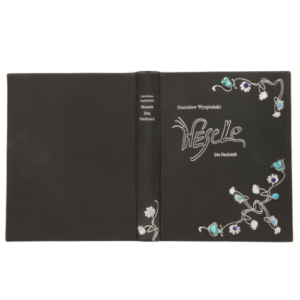
Stanisław Wyspiański, The Wedding
Some dramas remain inseparable from the imagination of an entire nation. Yet a small number transcend their historical origins and enter the wider territory of myth, ritual, and collective psychology. Wyspiański’s The Wedding belongs to that rare category. Deeply rooted in Polish symbolism and social...Read more