Fine Press Masterpieces
Collector’s Editions Since 1989
Each edition is conceived as a complete literary and artistic statement.
Since 1989, under our own imprint, we have published fine press and bibliophile editions of selected works from the canon of world literature. These are enduring works of poetry, prose, and drama — texts to which one returns over time, and which warrant permanence within a private library. The selection of titles forms a thematic line rooted in European classics, humanist thought, and philosophical reflection.
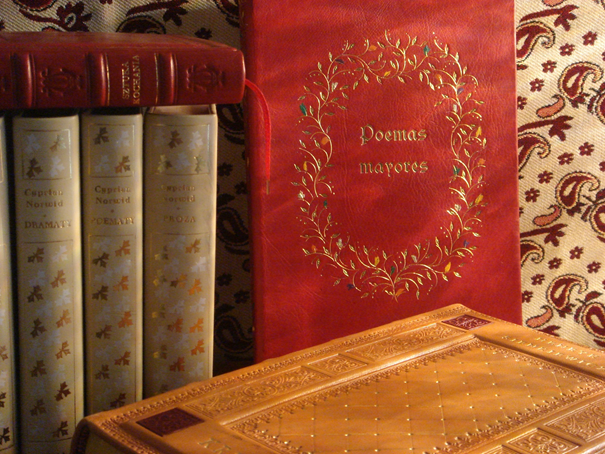
Publishing and artistic bookbinding remain inseparable within our practice. Every volume is bound by hand in our atelier, with careful attention to proportion, structure, material, and detail. The external form resonates with the internal meaning of the text — referring to its historical context, intellectual spirit, or assuming the character of metaphor. The binding does not decorate the text; it interprets it.
A distinctive feature of our editions is the diversity of their external form, often within a single title. The graphic structure of the book and its binding are conceived within a unified creative process, ensuring artistic coherence throughout the edition. Original illustrations, typographic composition, and the material character of the binding together form an interpretative whole.
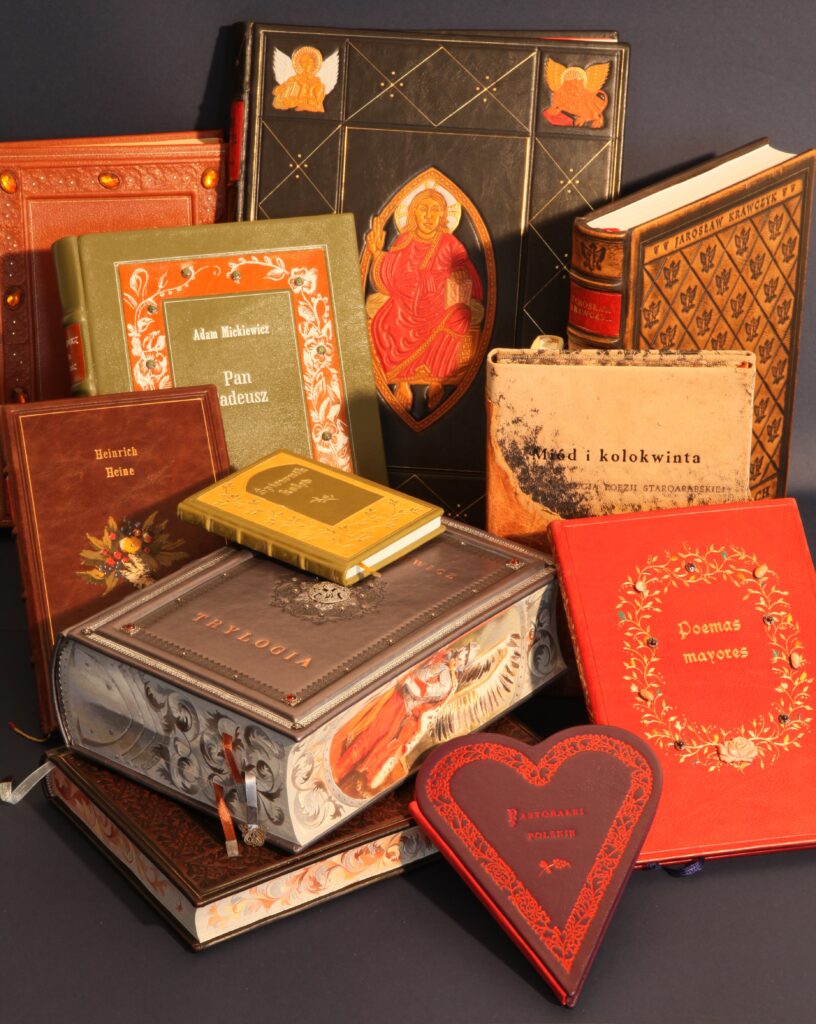
Designing an edition frequently requires historical, biographical, and iconographic research. The same responsibility guides us when creating individual artistic bindings for books beyond our own publications. Our editions are issued in strictly limited print runs. Each copy is individually hand-numbered, and all records are preserved in our publishing archive. No reprints or subsequent editions are produced. A portion of each edition takes the form of unique bindings, ensuring that certain exemplars exist only once.
For the collector, this represents not acquisition, but stewardship — of a work whose form and concept will not be repeated.

-
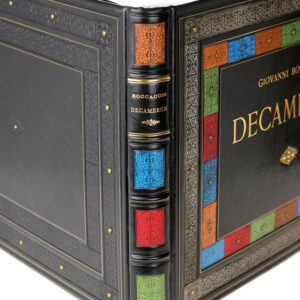
Giovanni Boccaccio, Decameron
Certain libraries are formed around literature alone. Others emerge from an entire way of inhabiting the world. Books & Gardens belongs to the latter tradition. Few works in European literature possess the vitality of Boccaccio’s Decameron. Written in the shadow of plague and social collapse,...Read more -
Adam Mickiewicz, Pan Tadeusz
More than a national epic, Pan Tadeusz preserves the memory of an entire European civilisation. Written in exile during the nineteenth century, Adam Mickiewicz’s masterpiece gathers within itself landscape, ritual, memory, hospitality, seasonal rhythm, and the codes of a cultivated landed culture already passing into...Read more -
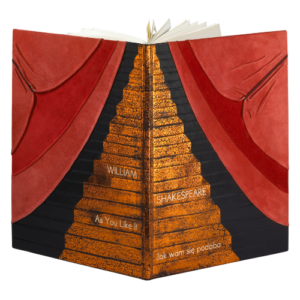
William Shakespeare, As You Like It
Not every Shakespearean comedy invites lightness. As You Like It does so with unusual intelligence. Behind its wit, disguises, pastoral play, and theatrical irony lies a meditation on identity itself: on the instability of roles, the freedom of performance, and the fragile distance between civilisation...Read more -
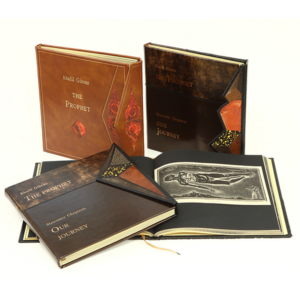
Khalil Gibran, The Prophet
Some books are read. Others are inhabited across a lifetime. Khalil Gibran’s The Prophet belongs to that rare category of works which pass quietly from literature into personal memory. Structured as a sequence of reflections on love, work, freedom, sorrow, joy, and human destiny, the...Read more -
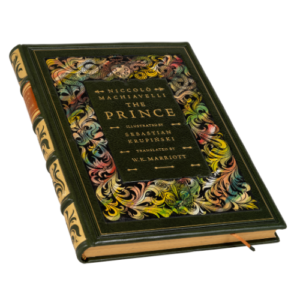
Niccolò Machiavelli, The Prince
Few political works have exercised such persistent influence upon the European imagination as Machiavelli’s The Prince. Feared, prohibited, admired, and endlessly debated, the text has survived not because it flatters power, but because it describes it with unusual clarity. Machiavelli strips political authority of idealisation...Read more -
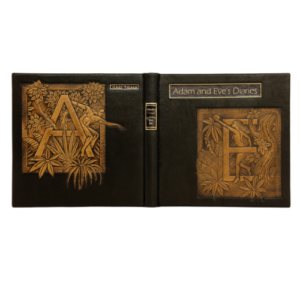
Mark Twain, Adam and Eve’s Diaries
Few literary works describe love with such delicacy beneath apparent simplicity. In Adam and Eve’s Diaries, Mark Twain transforms the biblical beginning of humanity into a study of curiosity, misunderstanding, tenderness, and emotional recognition. The humour remains light, yet beneath it lies an unusually perceptive...Read more -
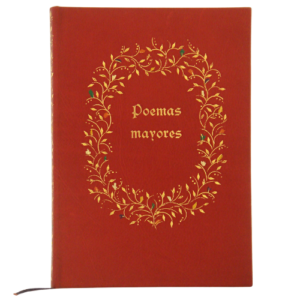
San Juan de la Cruz, The Poems of Saint John of the Cross
There are literary works that approach the limits of language itself. The poetry of Saint John of the Cross belongs among them. Written under conditions of imprisonment, spiritual extremity, and profound inward solitude, these texts occupy a singular place within both Spanish literature and the...Read more -
Heinrich Heine, Sonnets / Sonette
Heinrich Heine’s poetry occupies a singular place within European Romanticism. Beneath its lyrical grace lies intellectual precision; beneath its elegance, irony; beneath its apparent simplicity, emotional instability carefully held in balance. This first Polish–German bibliophile edition of Sonnets / Sonette was conceived in response to...Read more -
Jacques Prévert, L’Orgue de Barbarie
Certain poems resist enclosure within ordinary form. Jacques Prévert’s L’Orgue de Barbarie unfolds through repetition, return, interruption, and circular rhythm. The poem advances only to begin again, moving with the mechanical persistence of the barrel organ from which it takes its name. This bilingual edition...Read more -
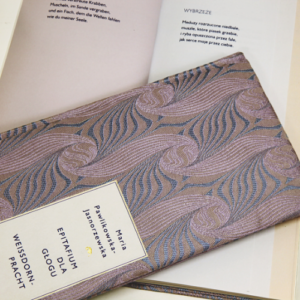
Maria Pawlikowska-Jasnorzewska, Epitaph for Hawthorn
Some books are designed to be read. Others are designed to alter atmosphere itself. This Polish–German edition of Epitaph for Hawthorn was conceived as a lyrical object governed by mood, tactility, colour, and sensory memory. The poetry of Maria Pawlikowska- Jasnorzewska — delicate, intimate, fleeting,...Read more -
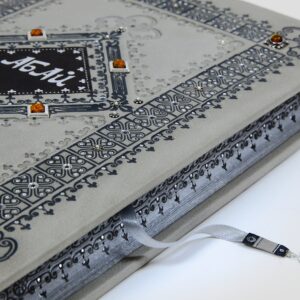
Abaj Kunanbajew, Abaj
Certain literary figures belong not only to literature, but to the cultural identity of an entire nation. Abaj Kunanbajew occupies such a place within Kazakh culture. Poet, philosopher, reformer, and creator of modern literary language, Abaj shaped a moral and intellectual vocabulary that continues to...Read more -
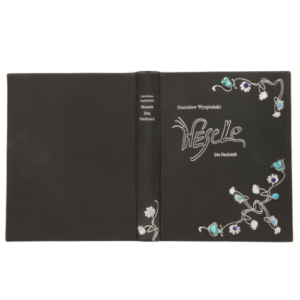
Stanisław Wyspiański, The Wedding
Some dramas remain inseparable from the imagination of an entire nation. Yet a small number transcend their historical origins and enter the wider territory of myth, ritual, and collective psychology. Wyspiański’s The Wedding belongs to that rare category. Deeply rooted in Polish symbolism and social...Read more -
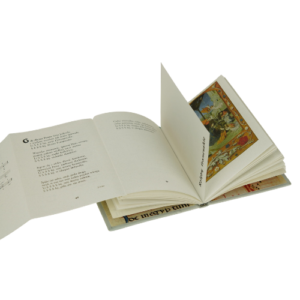
Christmas Carol Songbook
Certain books belong not to solitary reading, but to shared ritual. This multilingual Christmas carol songbook was conceived for moments of gathering: winter evenings, candlelight, family voices, and the fragile continuity of tradition carried through song. Small enough to be held easily in the hand,...Read more -
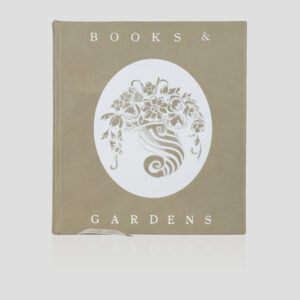
Books & Gardens, A Fine Press Meditation on Cultivated Life and Artistic Environment
Certain libraries are formed around literature alone. Others emerge from an entire way of inhabiting the world. Books & Gardens belongs to the latter tradition. Conceived as a personal album of Kurtiak & Ley Publishing House, the volume unites bibliophile culture, landscape, architecture, restoration, and...Read more -
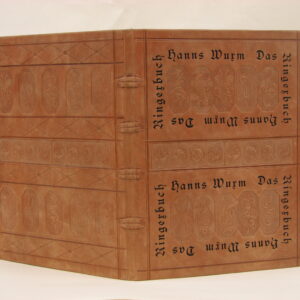
Hans Wurm, Das Ringerbuch
Printed in Landshut around 1500 by Hans Wurm, Das Ringerbuch—also known as Das Landshuter Ringerbuch—is among the earliest surviving printed manuals devoted to the German tradition of wrestling. Though modest in size, it occupies a distinctive place in the history of the European book, where...Read more -
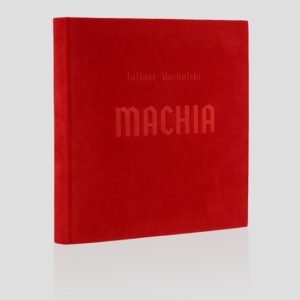
Juliusz Machulski, Machia
Limited edition of 88 individually numbered copies Original Polish text with a complete Italian translation in a separate appendix Printed on fine art paper Hand-bound in velvet Movable conceptual illustrations by Marysia Machulska Machia is a stage play by Juliusz Machulski, one of Poland’s most...Read more -
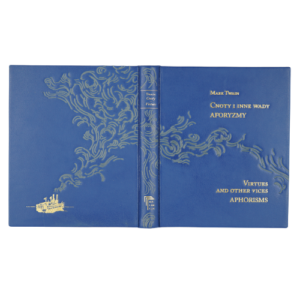
Mark Twain, Virtues and Other Vices
Mark Twain understood that wit may reveal human nature more precisely than solemnity. The aphorisms gathered in Virtues and Other Vices move effortlessly between humour, scepticism, moral observation, and intellectual play. Their brevity conceals unusual sharpness. Twain does not construct systems; he destabilises certainties. This...Read more -
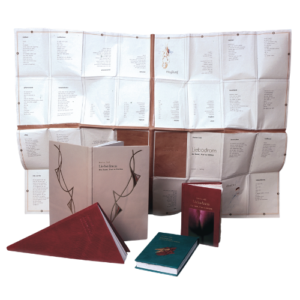
Marion Gräf, Liebodrom
Some literary works resist uniformity from the beginning. Marion Gräf’s Liebodrom was conceived not as a stable object repeated identically, but as a field of formal variation. The poems themselves move through successive stages of emotional and existential transformation, and the material structure of the...Read more -
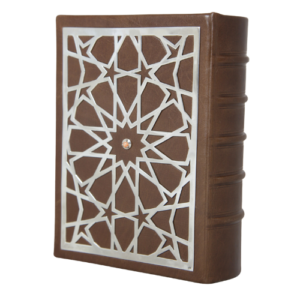
Muhammad al-Ali, Treatise on the Wonders of Astronomy
Only a single manuscript of this work is known to exist. Written in 1434, Muhammad al-Ali’s Treatise on the Wonders of Astronomy unites astronomy, geography, cosmology, and medieval systems of knowledge within one intellectual structure. In spirit, it belongs to that vanished world in which...Read more -
Publius Ovidius Naso, De Medicamine Faciei Feminae
Among the rare literary survivals of classical antiquity, De Medicamine Faciei Feminae occupies a singular place. Barely more than one hundred lines of Ovid's original poem have endured, preserved through the care of medieval scribes. Such a work called not merely for publication, but for...Read more